
At a glance
- What they are
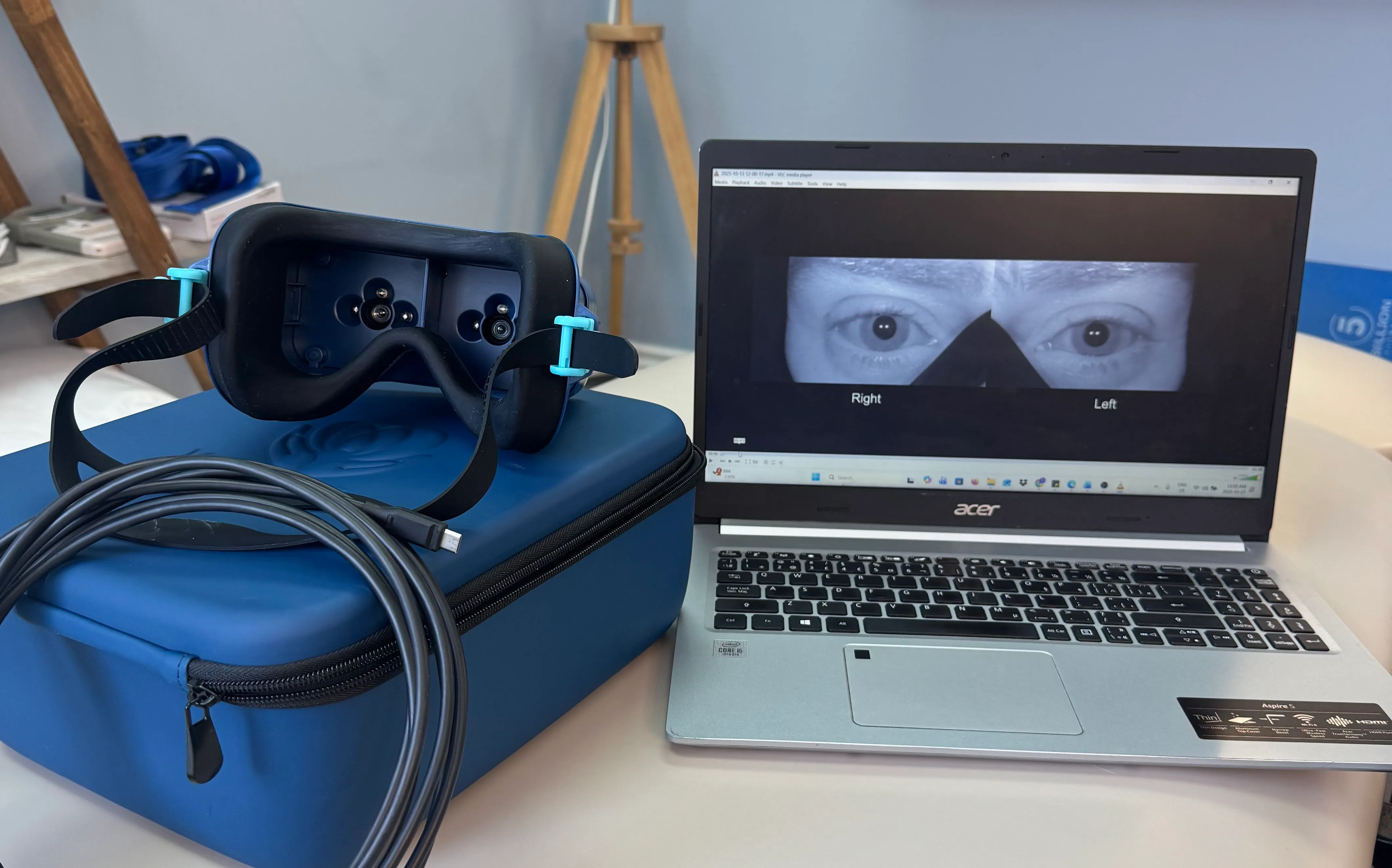
- Lightweight goggles with an infrared camera that record eye movements (nystagmus) in total darkness
- Why they matter
- They remove visual fixation, revealing eye movements the naked eye can’t see — so the cause of dizziness can be pinpointed
- Helps tell apart
- BPPV (and which canal), vestibular neuritis/labyrinthitis, Ménière’s disease, neck-related dizziness and central causes
- Is it invasive?
- No — you simply wear the goggles while your therapist observes your eyes on a screen
- How to book
- Online or by phone at 289-240-7875
Why the naked eye isn’t enough
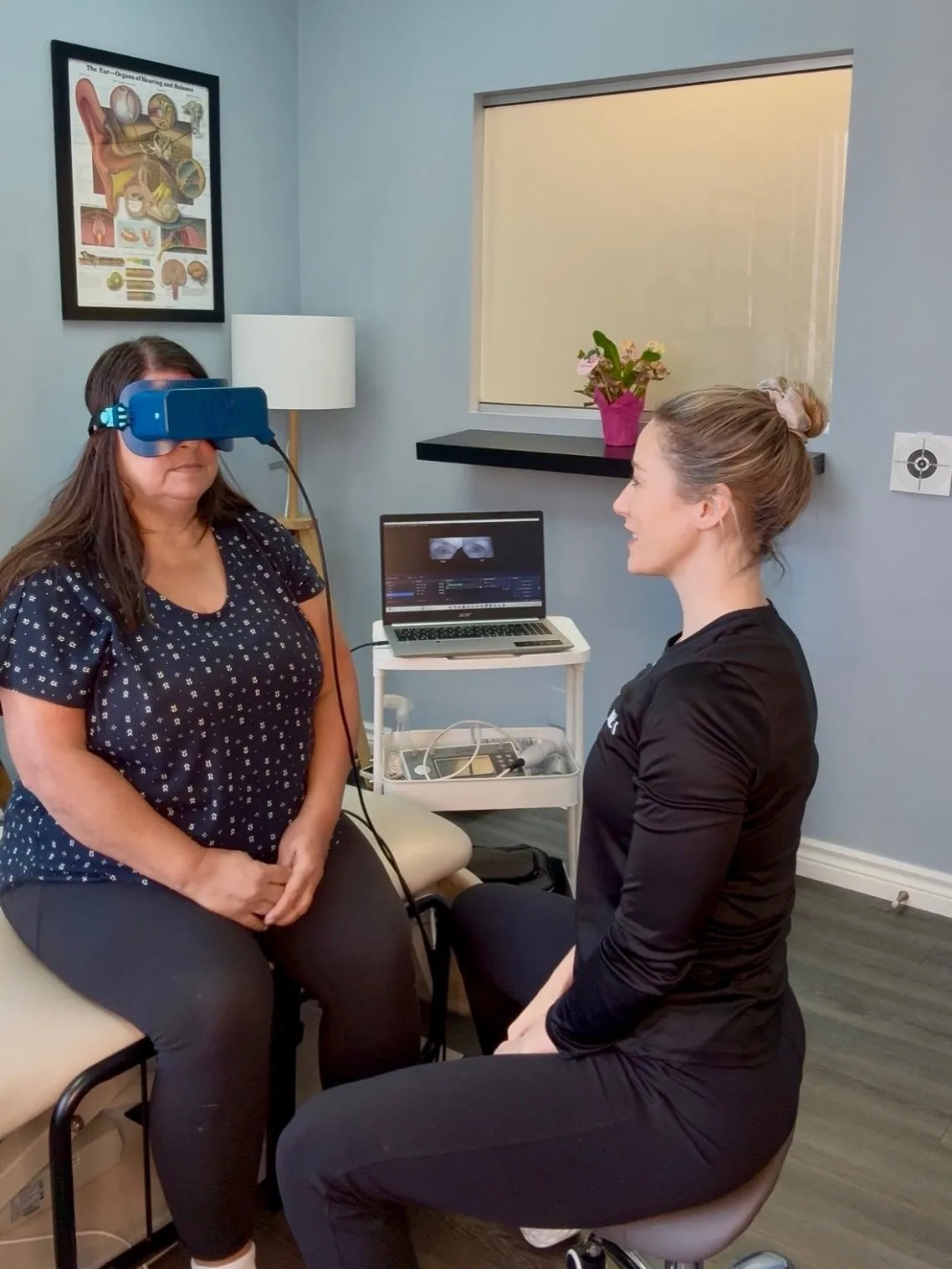
Traditional bedside vertigo exams rely on what the examiner can see. The problem is that your brain is very good at its job: in a lit room it uses visual fixation — locking onto a target — to suppress the tell-tale eye movements (nystagmus) that reveal what’s wrong.
Infrared video goggles take that fixation away. They’re widely regarded as the gold standard for accurately identifying the cause of vertigo and dizziness in the clinic.
How they work
Total darkness
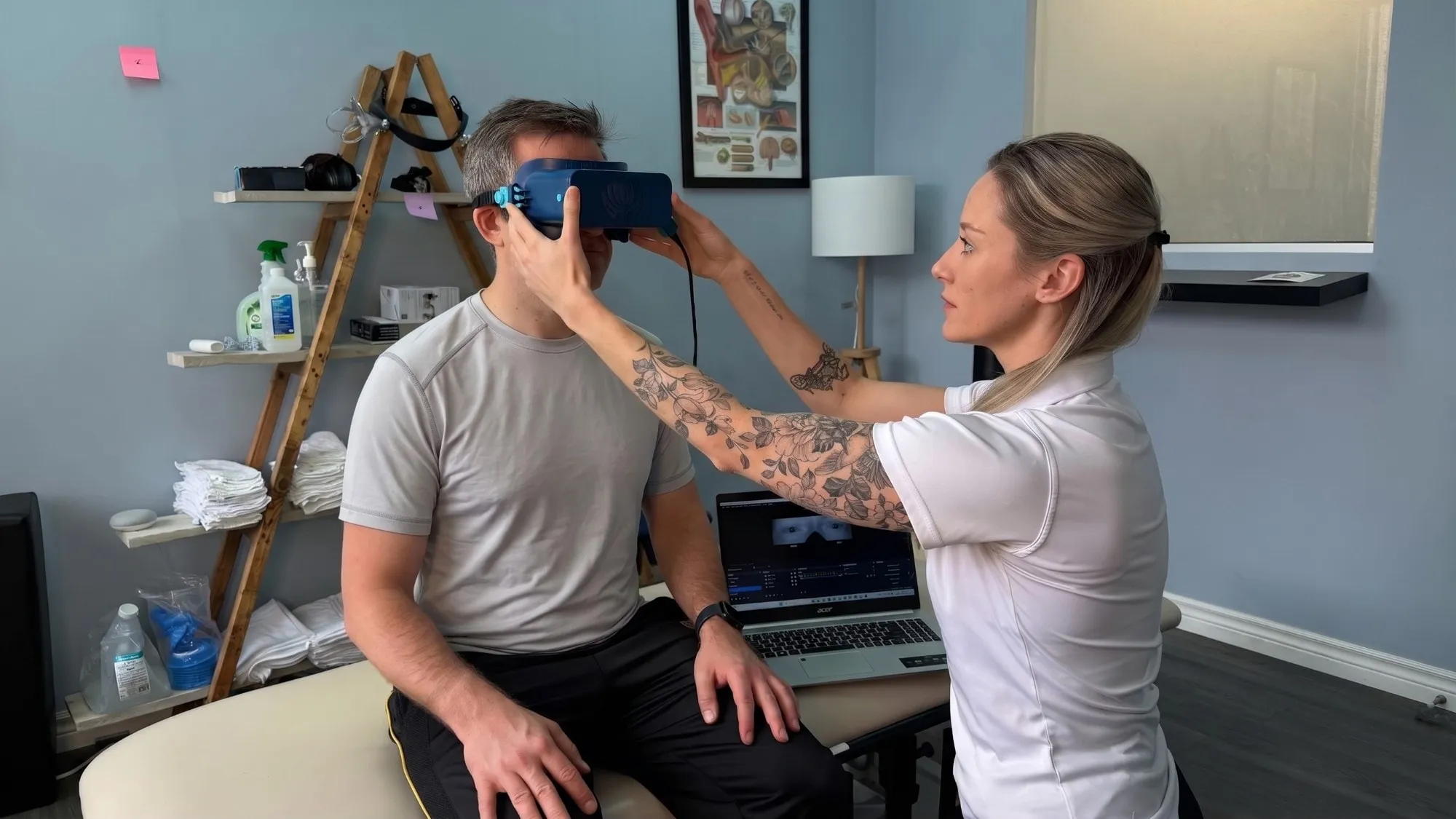
You wear a lightweight pair of goggles that blocks out all light, so your brain can no longer “cheat” and suppress your reflexes.
Infrared camera
A high-resolution infrared camera inside films your eyes and streams the image to a screen, so your therapist can analyze every movement in detail.
Your eyes are a direct window to your inner ear. The direction, speed and type of nystagmus tell us what is wrong — moving us from an educated guess to a precise diagnosis.
What the goggles help us tell apart
- BPPVNot just whether you have it, but which of the three inner-ear canals is affected.
- Vestibular neuritis / labyrinthitisInflammation of the inner ear or its nerve.
- Ménière’s diseaseDuring or after an attack.
- Cervicogenic dizzinessDizziness coming from the neck.
- Central dizzinessMore serious causes originating in the brain, such as stroke or vestibular migraine.
What this means for you
No more trial and error
Knowing exactly which canal is involved in BPPV means we can perform the correct manoeuvre — such as the Epley or Semont — on the first try.
Proof of progress
We can record your eye movements to set an objective baseline, track your recovery and confirm when the problem has resolved.
Safety first
Goggles are far more sensitive at detecting central nystagmus — a key red flag — so a serious problem can be spotted early and referred promptly.
Faster relief
A definitive answer, the right treatment from your first visit, and the confidence of an assessment backed by advanced technology.
Ready for answers?
Book an appointment for your infrared goggle assessment, or call us with any questions.