
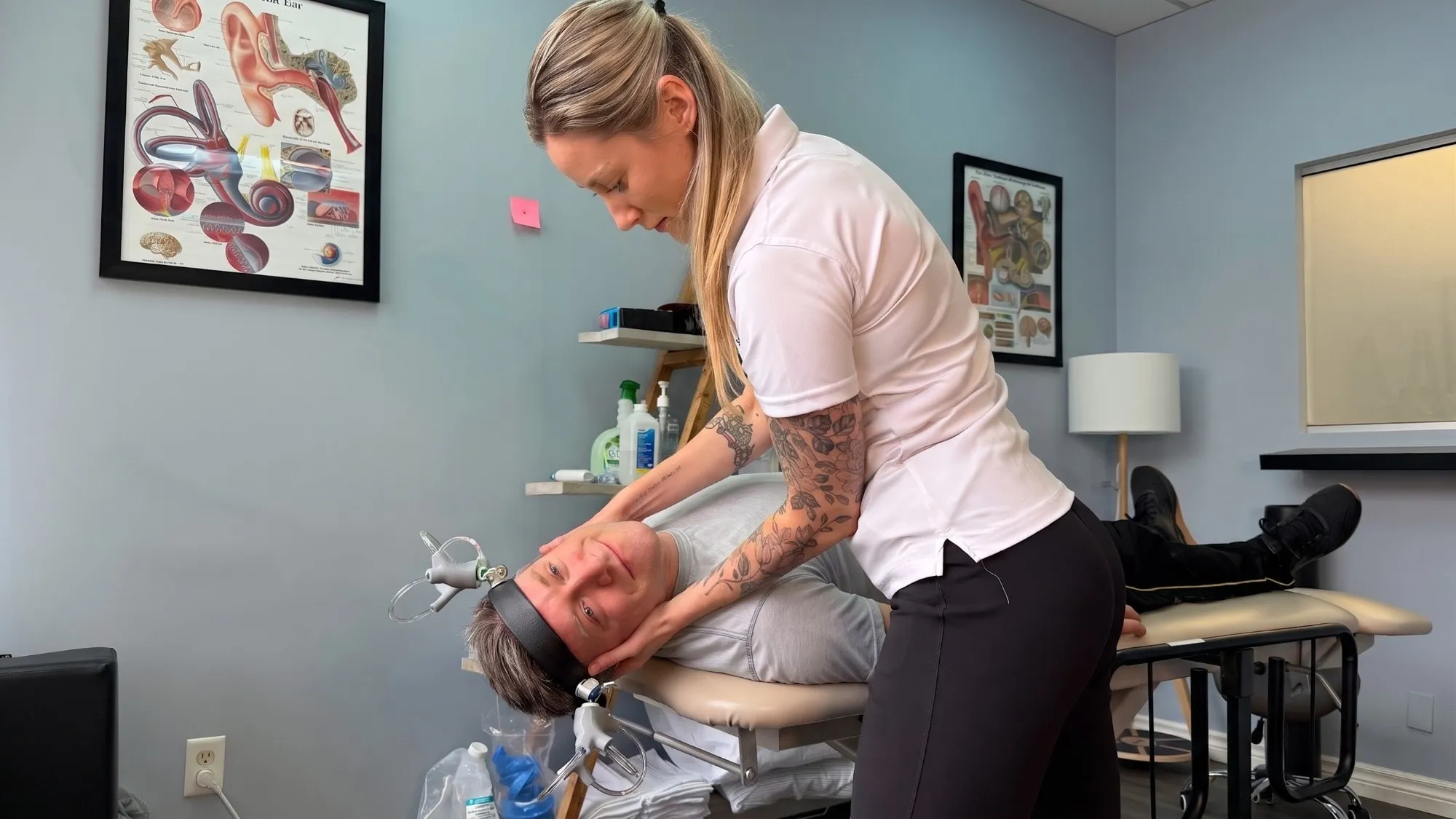
BPPV (Benign Paroxysmal Positional Vertigo) is the most common cause of vertigo in adults. It happens when tiny calcium crystals come loose inside the inner ear and drift into the balance canals, creating a false sense of spinning when you lie down, roll over, look up or sit up. BPPV is highly treatable — often resolving in just one to three sessions — using precise canalith repositioning manoeuvres performed by a vestibular specialist. At McKelvie Physiotherapy in Pickering, we assess exactly which ear and canal is affected, so the right manoeuvre is used the first time.
At a glance
- What it is
- Brief episodes of spinning vertigo triggered by changes in head position, caused by loose calcium crystals in the inner ear’s canals
- How common
- The most common cause of vertigo in adults; about 2.4% of adults have it at some point in their lives
- Typical triggers
- Lying down, rolling over in bed, sitting up, looking up or bending forward
- Common causes
- Head injury, inner-ear infection or age-related changes — and sometimes no obvious cause
- Treatment
- A canalith repositioning manoeuvre matched to the affected ear and canal — recommended by clinical practice guidelines
- How many visits
- Often one to three sessions when the affected canal is correctly identified
- At McKelvie
- 60-minute vestibular assessment with infrared video goggles ($180) in Pickering; no referral needed
What is BPPV?
BPPV is a condition marked by brief, intermittent episodes of vertigo — a false sense of spinning — triggered by changes in head position. Most people notice it when they:
- lie down or lean back
- roll over in bed
- sit up from lying down
- look up or bend forward
Each episode is usually short — from a few seconds to a couple of minutes — and settles once the head is still again. Alongside the spinning, many people feel off-balance, nauseous, tired or anxious.
What causes BPPV?
Inside your inner ear, a small organ called the utricle holds tiny calcium-rich crystals called otoconia. Sometimes these crystals come loose and drift into the semicircular canals — the part of the inner ear that senses rotation and speed of head movement.
Once inside a canal, the particles either float freely or stick to its structures. Every time you move your head, they send a false signal of motion, and your brain wrongly believes you are spinning.
BPPV can follow a head injury or an inner-ear infection, or simply occur with age — and sometimes there’s no obvious cause.
What are the symptoms of BPPV?
- Sudden spinning (vertigo) when lying down, rolling over or tilting the head back
- Short episodes, typically lasting seconds to a couple of minutes
- Imbalance or unsteadiness between episodes
- Nausea, and occasionally vomiting
- Light-headedness or a feeling of “fogginess”
- Anxiety about triggering another episode
When it might not be BPPV
If your dizziness is constant rather than triggered by position, or comes with hearing loss, a severe headache or other neurological symptoms, it may not be BPPV — a thorough vestibular assessment will tell the difference.
Why the right diagnosis matters
BPPV can be extremely distressing. It often brings significant anxiety and nausea, and can stop you working or functioning normally day to day.
It’s also common — and commonly under-treated. In a large population study, about 2.4% of adults had BPPV at some point in their lives, and 86% of those affected needed medical care, interrupted their daily activities or took sick leave because of it. Yet only 8% received an effective treatment (von Brevern et al., 2007).
The clinical practice guideline from the American Academy of Otolaryngology–Head and Neck Surgery strongly recommends diagnosing the most common form of BPPV with the Dix-Hallpike test and treating it with a canalith repositioning procedure such as the Epley manoeuvre (Bhattacharyya et al., 2017).
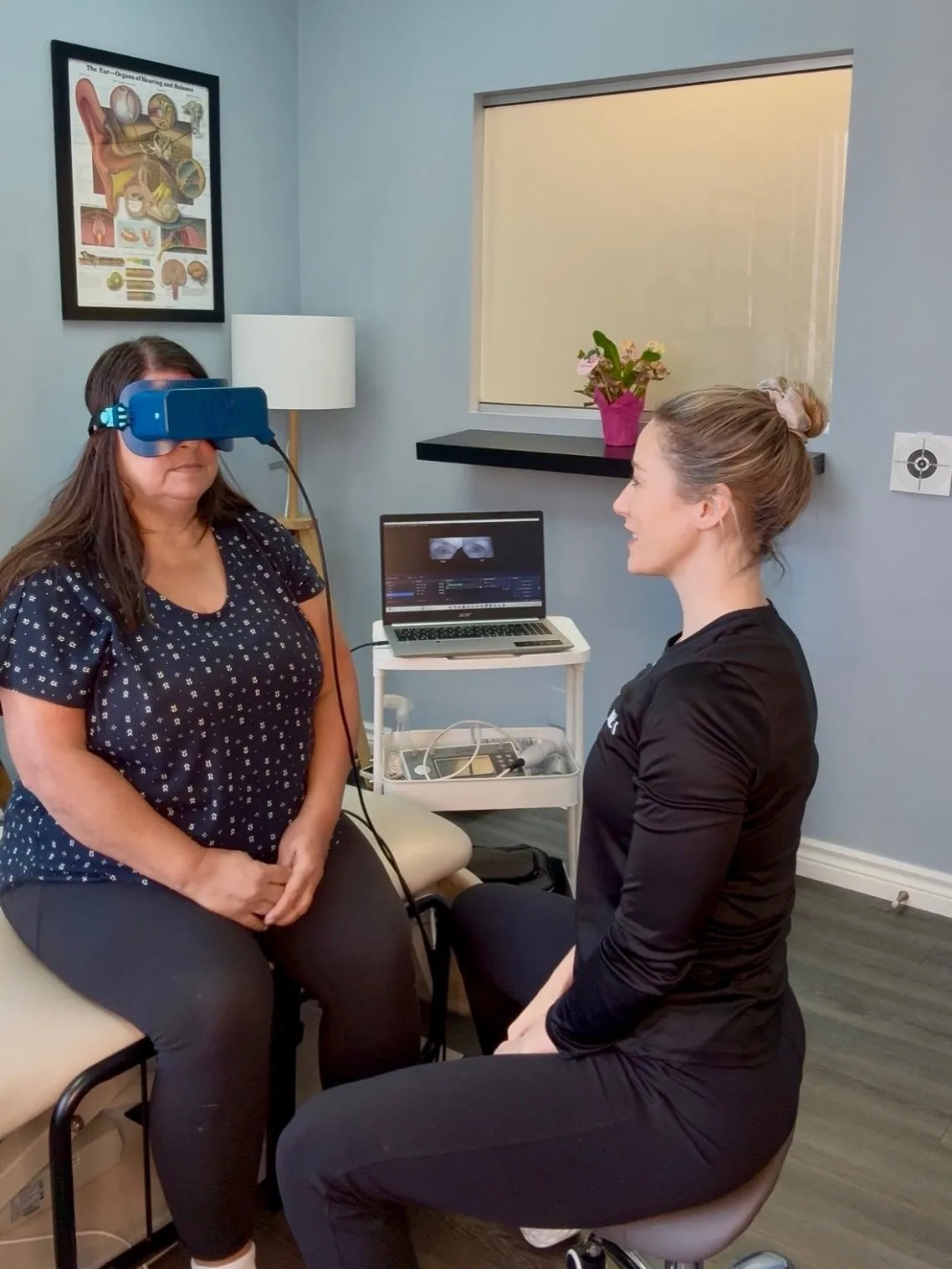
There are three canals in each ear, and each needs a different repositioning manoeuvre. To fix BPPV, we have to know which ear, which canal and what the particles are doing. That’s why we assess with infrared video goggles, which reveal eye-movement patterns the naked eye can’t see.
How is BPPV treated?
BPPV is treated with canalith repositioning manoeuvres — a precise series of guided head and body movements that move the displaced crystals out of the canal and back to where they belong. The best known is the Epley manoeuvre, but it’s only one of several, and the correct technique depends on which ear and which canal is involved. Applied to the right side, the right manoeuvre often resolves symptoms in one to three visits.
Pinpoint
Positional testing with infrared goggles to identify the affected ear and canal, and to rule out other causes of vertigo.
Reposition
The correct canal-specific manoeuvre (for example Epley, Semont or a roll manoeuvre) to guide the crystals back where they belong.
Recover & prevent
Re-testing to confirm it has cleared, education on what to expect, and clear guidance to reduce the chance of it coming back.
If BPPV keeps returning or hasn’t responded to treatment elsewhere, we’ll dig deeper — complex and recurrent cases are a large part of what we do.
A note from our advanced vestibular specialist
The most common thing I see is people who were given a single generic Epley manoeuvre that didn’t hold — usually because the affected canal wasn’t identified first. BPPV is very treatable when you assess carefully and match the manoeuvre to the specific ear and canal. Even long-standing or “stubborn” cases that bounced between providers often settle quickly once the assessment is done properly.
 Zoe BrownRegistered Physiotherapist & Certified Advanced Vestibular Specialist
Why choose McKelvie Physiotherapy for BPPV?
- True vestibular specialists — BPPV and dizziness are our clinical focus, not a sideline.
- Advanced diagnostic technology — we use infrared video goggles (video-oculography) to record eye movements the naked eye can’t see, so your diagnosis is based on evidence, not guesswork.
- Accurate, one-on-one assessment — we identify the exact ear and canal before treating.
- Complex cases welcome — including recurrent or previously unresolved BPPV.
- Care that comes to you — in person in Pickering, at home across the GTA, or virtually anywhere in Ontario.
- Direct billing to many major insurers — and no referral needed.
Sources
- Clinical Practice Guideline: Benign Paroxysmal Positional Vertigo (Update). Otolaryngology–Head and Neck Surgery (Bhattacharyya N, et al.), 2017.
- Epidemiology of benign paroxysmal positional vertigo: a population based study. Journal of Neurology, Neurosurgery & Psychiatry (von Brevern M, et al.), 2007.