At a glance
- What it treats
- Vertigo, dizziness, imbalance and motion sensitivity from inner-ear (vestibular) and related conditions, including BPPV
- Who provides it
- Registered physiotherapists with advanced vestibular training, led by an AVPT-certified vestibular specialist
- First visit
- 60-minute one-on-one vestibular assessment ($180); 30-minute follow-ups ($90)
- Referral
- Not needed (some insurance plans require one for reimbursement)
- Coverage
- Not covered by OHIP; claimable under extended health benefits, with direct billing to most major insurers
- Where
- 1400 Bayly Street, Pickering, Ontario — or by video anywhere in Ontario, or at home across the GTA
What is vestibular rehabilitation?
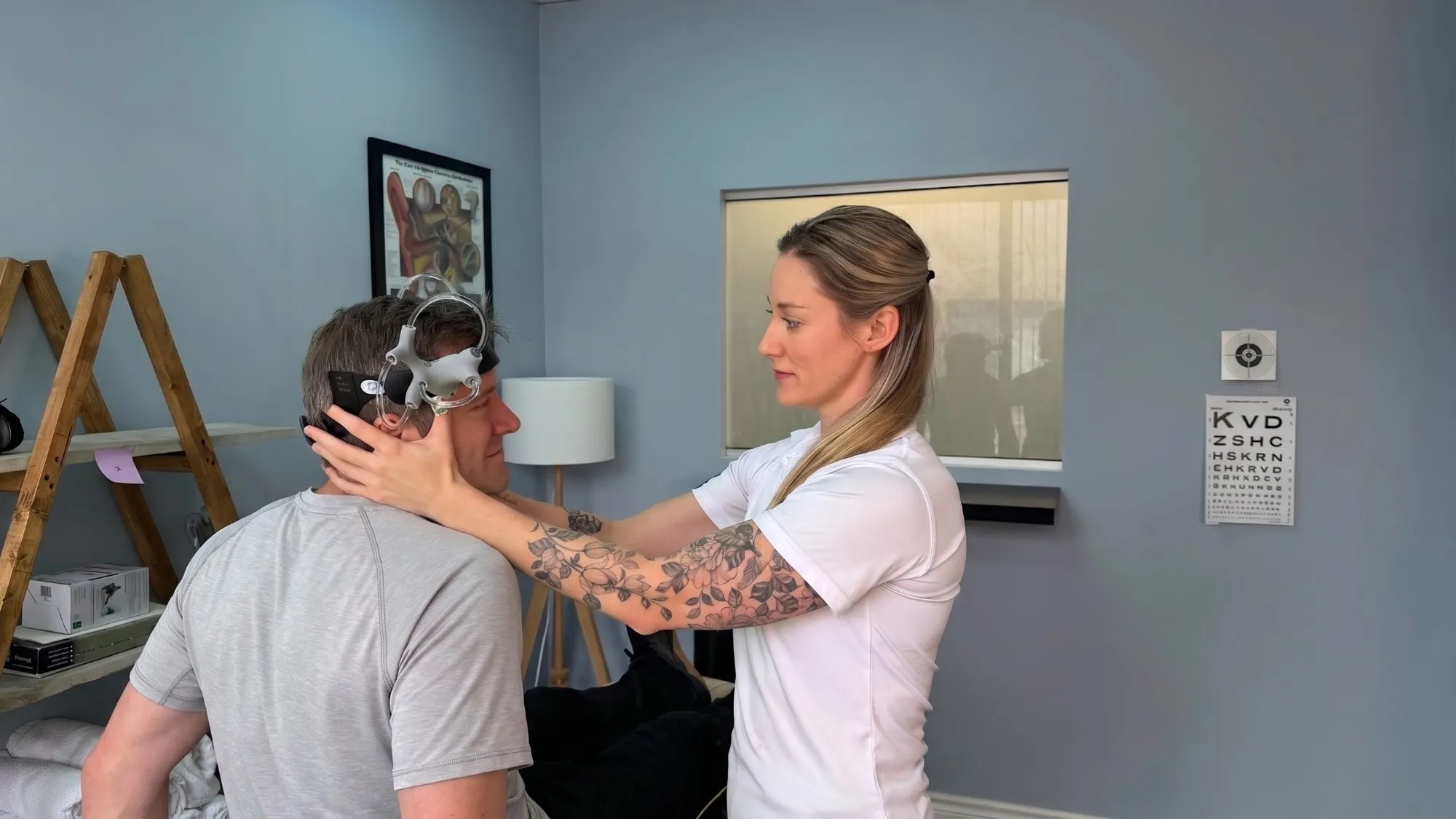
Your vestibular system — the balance organs of the inner ear and the parts of the brain that process their signals — tells you where your head is in space. When it’s disrupted, the result can be spinning vertigo, light-headedness, unsteadiness, motion sensitivity or blurred vision when you move.
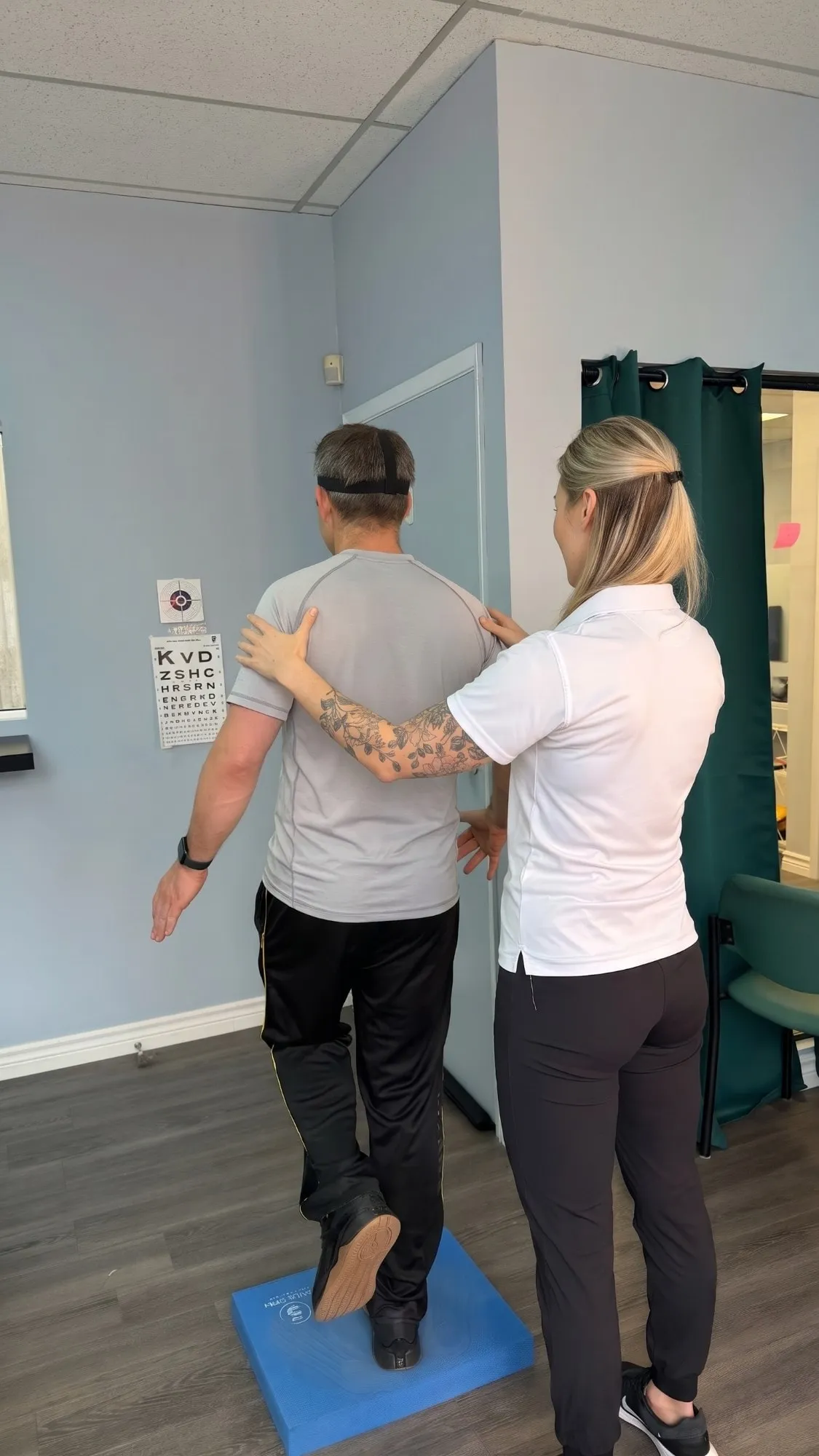
Vestibular rehabilitation is a specialized, evidence-based branch of physiotherapy that treats these problems. Depending on your diagnosis, treatment may include precise repositioning manoeuvres, gaze-stability and balance exercises, habituation to motion triggers, and education so you understand what’s happening and how to manage it.
It can correct vertigo, improve balance and visual stability, reduce symptoms and restore your confidence and quality of life.
The evidence is strong. The Academy of Neurologic Physical Therapy’s clinical practice guideline recommends — based on strong evidence — that adults with vestibular hypofunction be offered vestibular rehabilitation (Hall et al., 2022). For BPPV, guidelines recommend a canalith repositioning procedure matched to the affected canal (Bhattacharyya et al., 2017).
Why see a vestibular specialist?
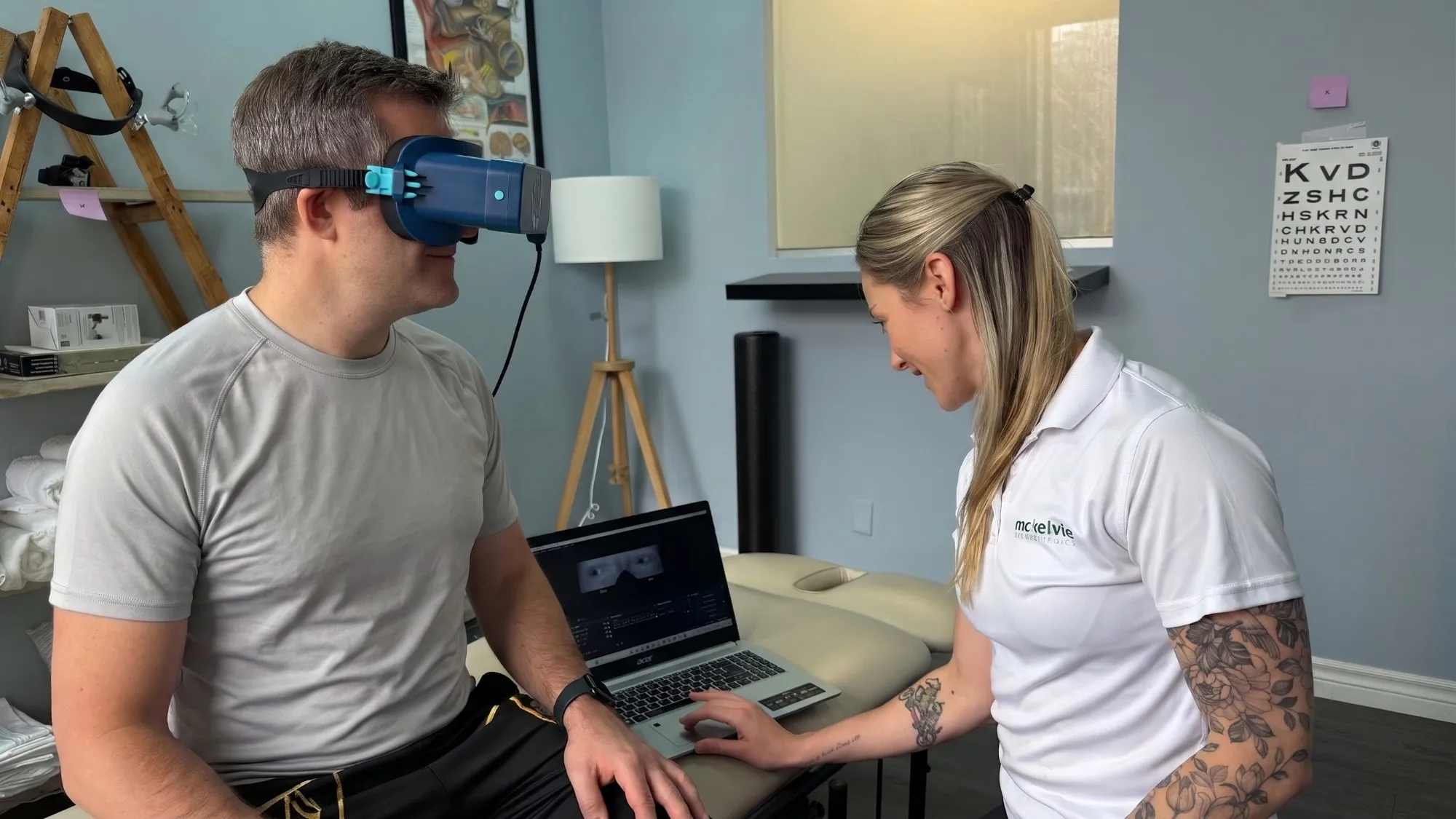
Dizziness has many possible causes, and the right treatment depends on the right diagnosis. Our lead physiotherapist holds the Advanced Vestibular Physical Therapist (AVPT) certification, and we use infrared video goggles to see eye movements that are invisible in normal light. How the goggles help.
Conditions we treat
- Benign Paroxysmal Positional Vertigo (BPPV)
- Vestibular neuritis
- Labyrinthitis
- Ramsay Hunt syndrome
- Acoustic neuroma
- Labyrinthine concussion
- Vestibular migraine
- Ménière’s disease
- Secondary endolymphatic hydrops
- Superior canal dehiscence
- Mal de débarquement syndrome
We also see people with persistent postural-perceptual dizziness (PPPD), cervicogenic (neck-related) dizziness and post-concussion symptoms. If you’re not sure whether we can help, get in touch.
What to expect
Thorough assessment
We review your medical records, take a full history and complete detailed physical, neurological and vestibular testing — with infrared video goggles where needed.
A plan built with you
Your therapist explains what’s going on, talks through treatment options and sets rehabilitation goals with you. Frequency and treatment are tailored to you and your condition.
Treat, re-assess, recover
Regular re-assessments measure progress and guide next steps. We keep you — and, with your permission, your medical team — informed throughout.
In clinic, online or at home
Most patients are seen at our Pickering clinic, in a private room with all the diagnostic equipment on hand. If travelling is difficult, we also offer:
- Virtual vestibular rehab — video sessions for anyone living in Ontario.
- In-home vestibular rehab — priority home visits in West Toronto and across the GTA during an acute attack.
Sources
- Vestibular Rehabilitation for Peripheral Vestibular Hypofunction: An Updated Clinical Practice Guideline. Journal of Neurologic Physical Therapy (Hall CD, et al.), Academy of Neurologic Physical Therapy, 2022.
- Clinical Practice Guideline: Benign Paroxysmal Positional Vertigo (Update). Otolaryngology–Head and Neck Surgery (Bhattacharyya N, et al.), 2017.